
Does Anodizing Affect the Machined Dimensions of CNC Workpieces?
For custom precision aluminum CNC parts, anodizing is one of the most widely used surface finishing treatments. Many industrial buyers run into troublesome assembly problems after anodizing, including tight shaft-hole matching, stuck threads and unfit precision mating surfaces. The main cause is the dimensional deviation produced by the anodic oxide film. This article details how anodizing alters part sizes and our mature pre-processing compensation solution to solve assembly defects fundamentally.
Will Anodizing Cause Dimensional Changes to Aluminum Parts?
Anodizing will slightly increase the actual size of aluminum workpieces due to the generated oxide layer.
- Hard anodizing film thickness: 5μm ~ 25μm
- Conventional natural / black anodizing film thickness: 8μm ~ 12μm
If manufacturers machine parts strictly according to nominal drawing dimensions without reserving compensation margin for the oxide layer in advance, multiple assembly failures will appear: threads get locked, shaft and hole fit too tight, and precision matching surfaces cannot be assembled normally. Such problems will delay your product development cycle and bring extra rework costs.
Our Pre-Machining Compensation Process for Anodizing
We have rich experience in producing precision aluminum components for European and American equipment manufacturers. We formulate targeted dimensional allowance schemes at the CNC finishing stage to offset the thickness of the anodic film, ensuring all finished dimensions meet drawing tolerances after surface treatment.
- Inner holes, threaded holes and precision clearance matching positions
We pre-set dedicated machining allowance during CNC fine processing to offset the growth of oxide film.
- Outer circles and external mounting reference surfaces
Corresponding film thickness margin is reserved synchronously, so all dimensional parameters after anodizing stay within the required tolerance range.
- Special optimization for precision threads
We expand the bottom hole size before anodizing. After finishing, bolts can be installed and removed repeatedly smoothly, completely avoiding thread seizing and abrasion.
Why Our Pre-Process Compensation Is Better Than Ordinary Manufacturers
Most general machining factories only process parts to the nominal size marked on drawings and carry out anodizing afterward without any allowance adjustment. The thickness of the oxide film will change the actual size of components, eventually leading to overall assembly rework for your equipment.
As a professional precision CNC machining factory, we fully take the dimensional impact of anodizing into account at the initial processing stage. Our standardized pre-process compensation design eliminates assembly failures caused by anodizing from the source. We supply stable tolerance-compliant aluminum precision parts for automation machinery, medical equipment, new energy devices and other industries.
Final Words
Anodizing inevitably forms an oxide film and changes workpiece dimensions. Only manufacturers with mature aluminum processing technology can accurately calculate and reserve reasonable compensation allowance based on different anodizing types.
If you need custom aluminum precision parts with anodizing treatment, feel free to send your 2D & 3D drawings to us. Our engineering team will provide professional dimensional analysis and competitive factory quotation within 72 hours.

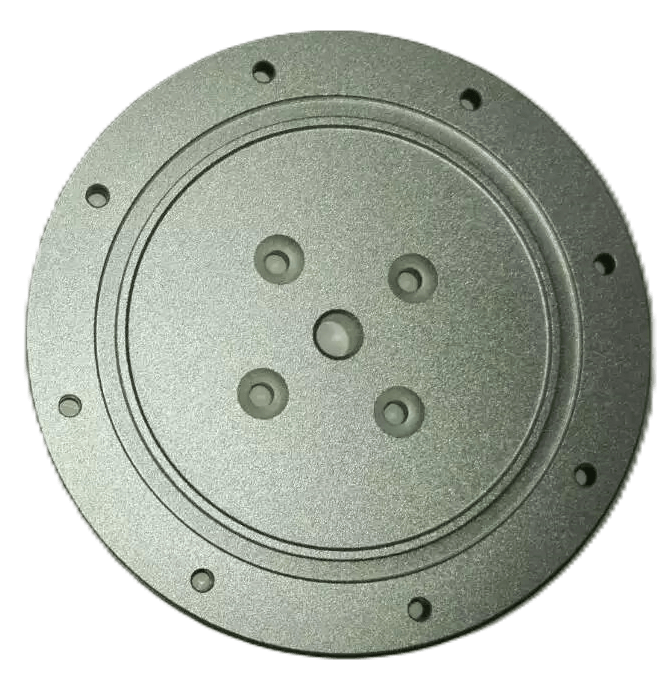
SZYLPC — Your Precision CNC Machining Partner
We specialize in custom CNC turning, milling, and multi-axis machining services for general machinery, automation equipment, robotic systems, semiconductor & 3C electronic devices, transmission equipment, semiconductor, medical equipment, aerospace tooling and precision machinery fields.